Japanese New Year 2027: January 1, Traditions, Food, and Shrine Visits
Acest articol nu este încă disponibil în română. Citiți versiunea în engleză.
Japanese New Year 2027 falls on Friday, January 1. Learn how the holiday differs from the wider season, what traditional foods mean, and when to make your first shrine or temple visit.
Japanese New Year’s Day in 2027 falls on Friday, January 1. Known as Ganjitsu, January 1 is a national holiday in Japan every year. Article 2 of Japan’s national holiday law sets its date and purpose, “to celebrate the beginning of the year,” while Article 3 makes it a day off.
If you’re planning around the holiday, check the closure dates for your workplace, school, or any businesses you intend to visit. Their official notices will tell you how long their breaks last.
When did New Year’s Day become Japan’s current holiday?
January 1 is the first day of the calendar year in the Gregorian calendar. Ganjitsu celebrates that first day of the new year.
Before it became the current national holiday, January 1 was called Shihōsetsu, after the imperial ceremony Shihōhai. The national holiday law, promulgated and put into effect in 1948, replaced Shihōsetsu with Ganjitsu as a national holiday.
How do Ganjitsu, Sanganichi, and Gantan differ?
Ganjitsu means January 1 alone, while Sanganichi covers January 1 through January 3. If someone says they’re going on Ganjitsu, they mean January 1. If they say Sanganichi, they mean sometime during that period.
Japanese New Year, or Oshōgatsu, extends beyond New Year’s Day. Across Japan, the term often refers to Sanganichi or the period known as Matsu no Uchi, when people observe seasonal customs and celebrations.
You may also come across Gantan. It can mean the same thing as Ganjitsu, but it can also refer specifically to the morning of New Year’s Day. To avoid confusion, use “New Year’s Day” for the date and “New Year’s morning” for the morning.
Another seasonal term is Koshōgatsu, or “Little New Year,” which centers on January 15. Its name contrasts with Ōshōgatsu, or “Great New Year,” centered on New Year’s Day. A custom on the morning of Koshōgatsu is eating rice porridge with azuki beans, which are believed to ward off evil.
What do Japanese New Year decorations mean?
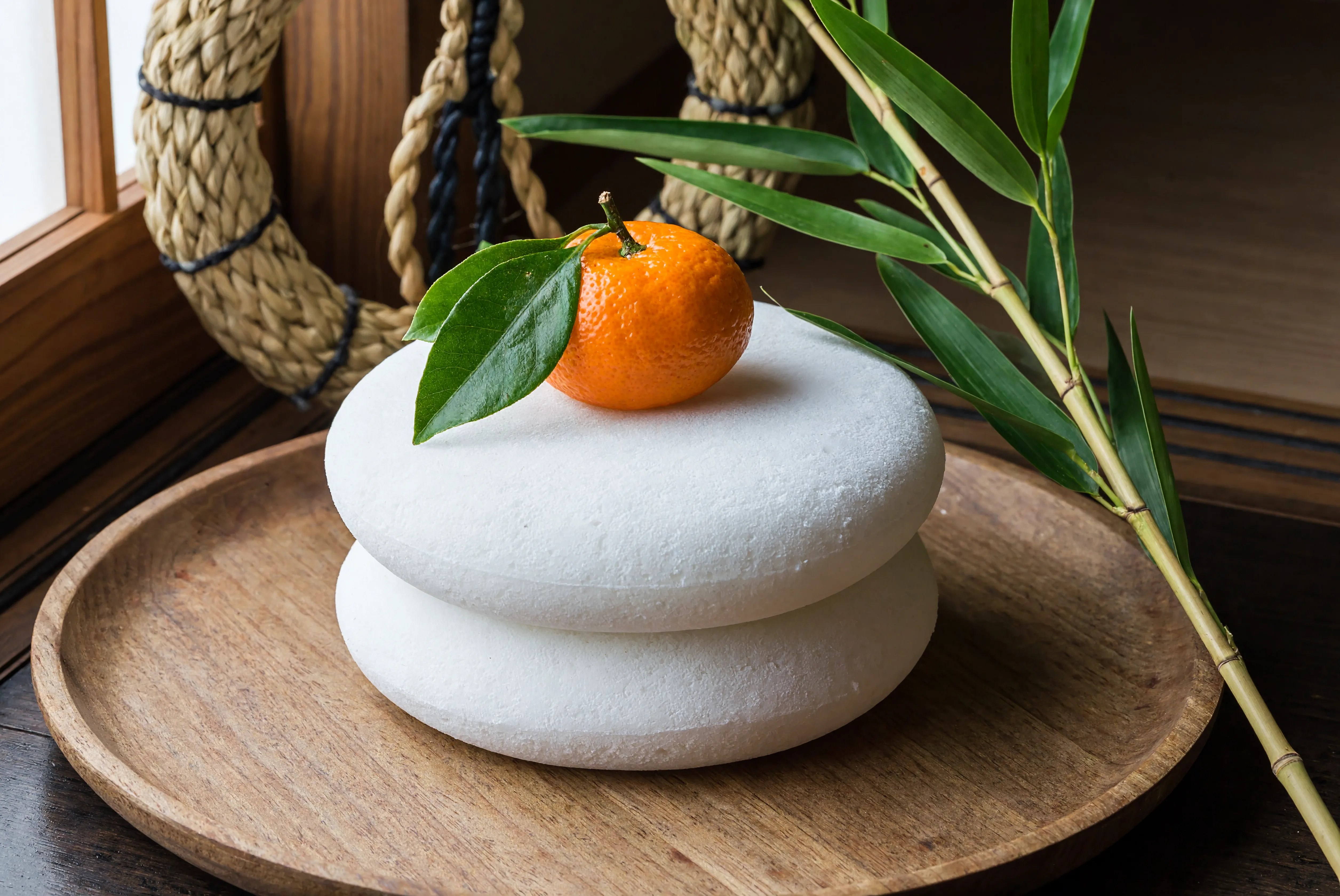
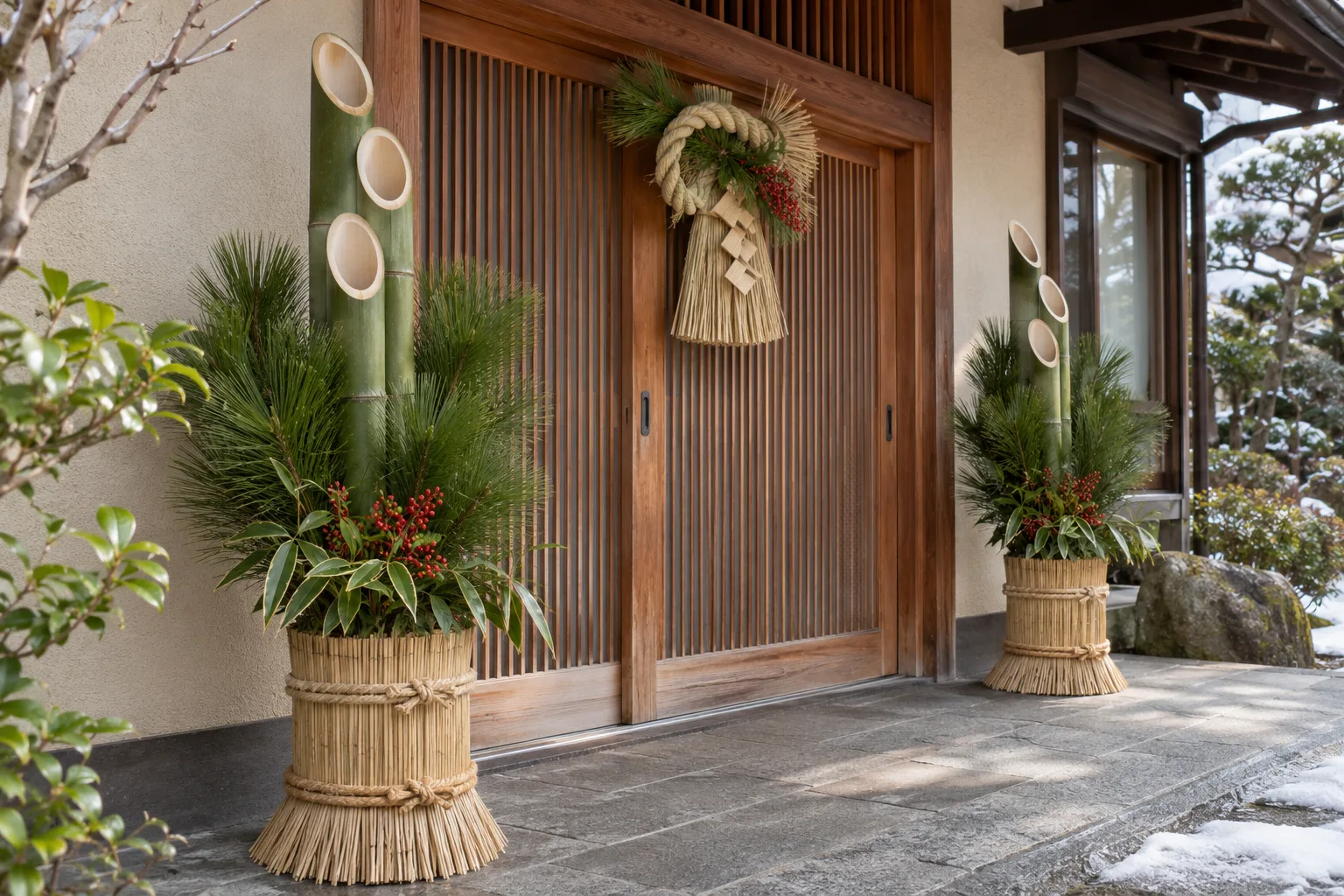
Japanese New Year traditions include welcoming Toshigami-sama, the deity of the new year, into the home. Kadomatsu and shimekazari decorations are placed at the entrance, and kagami mochi is offered to welcome the deity.
The decorations and foods carry wishes for a year free from illness and misfortune, along with a plentiful harvest.
Kotohajime, observed on December 13, marks the start of New Year preparations. Ceremonies for burning New Year decorations are called Dondoyaki or Sagichō. In some regions, they take place around Koshōgatsu.
Japanese New Year traditions 2027: What do the foods symbolize?
Osechi ryōri and ozōni are traditional New Year’s Day foods. Osechi dishes express wishes for household safety and good health throughout the year. Their ingredients also carry auspicious meanings tied to their shapes or names.
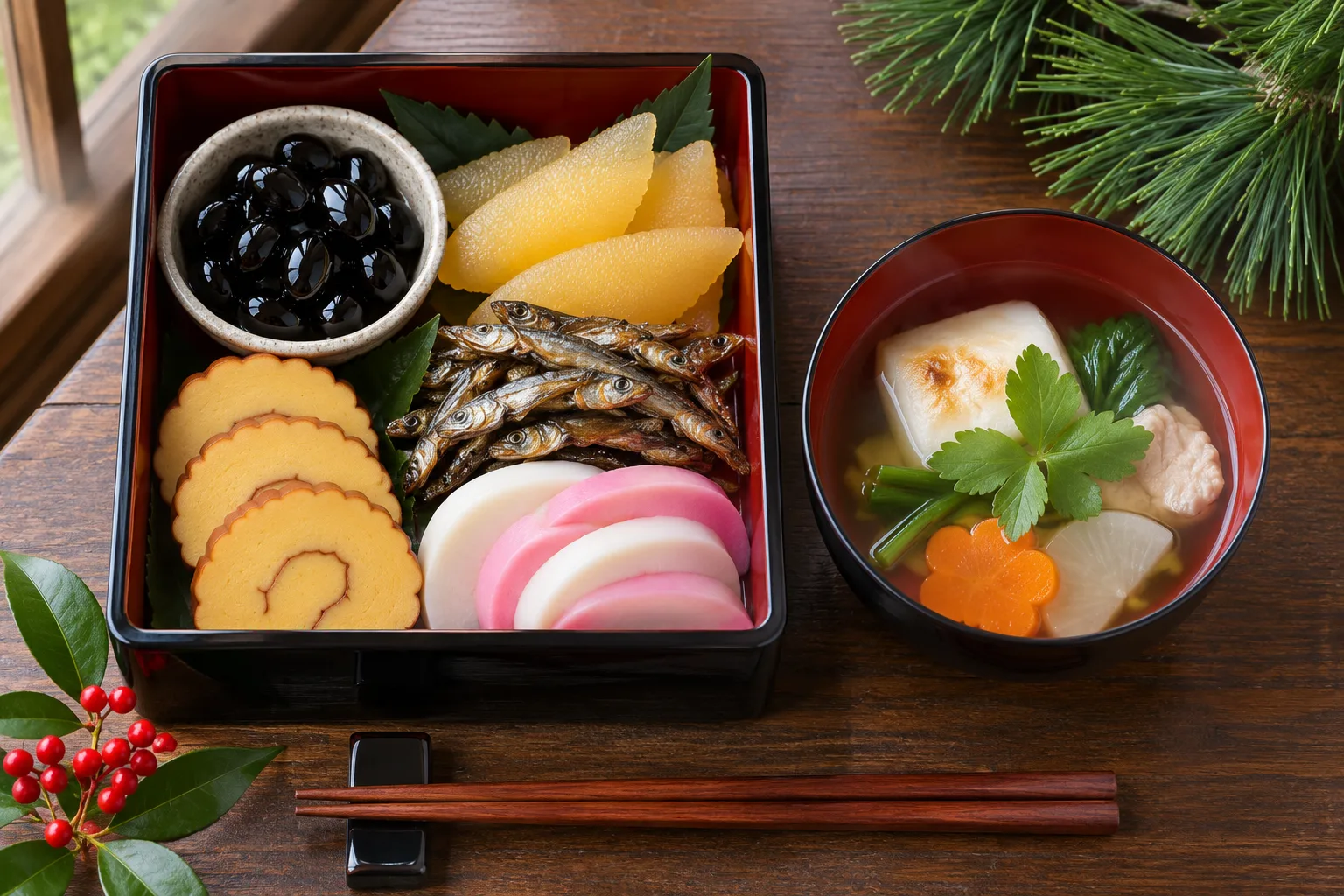
- Kinton: Written with characters meaning “golden dumpling,” its golden color represents a wish for financial good fortune.
- Tazukuri: This dish expresses a wish for a bountiful harvest, recalling the use of Japanese anchovies as fertilizer in fields.
- Kazunoko: Herring roe represents a wish for many descendants because a single roe sac contains so many eggs.
Kagami Biraki is the custom of eating the kagami mochi offered during Japanese New Year. The rice cakes, believed to have housed Toshigami-sama, are taken down and broken with a wooden mallet or a similar tool rather than cut with a blade. Blades are said to be avoided because the word “cut” evokes associations such as ritual suicide by disembowelment, or seppuku.
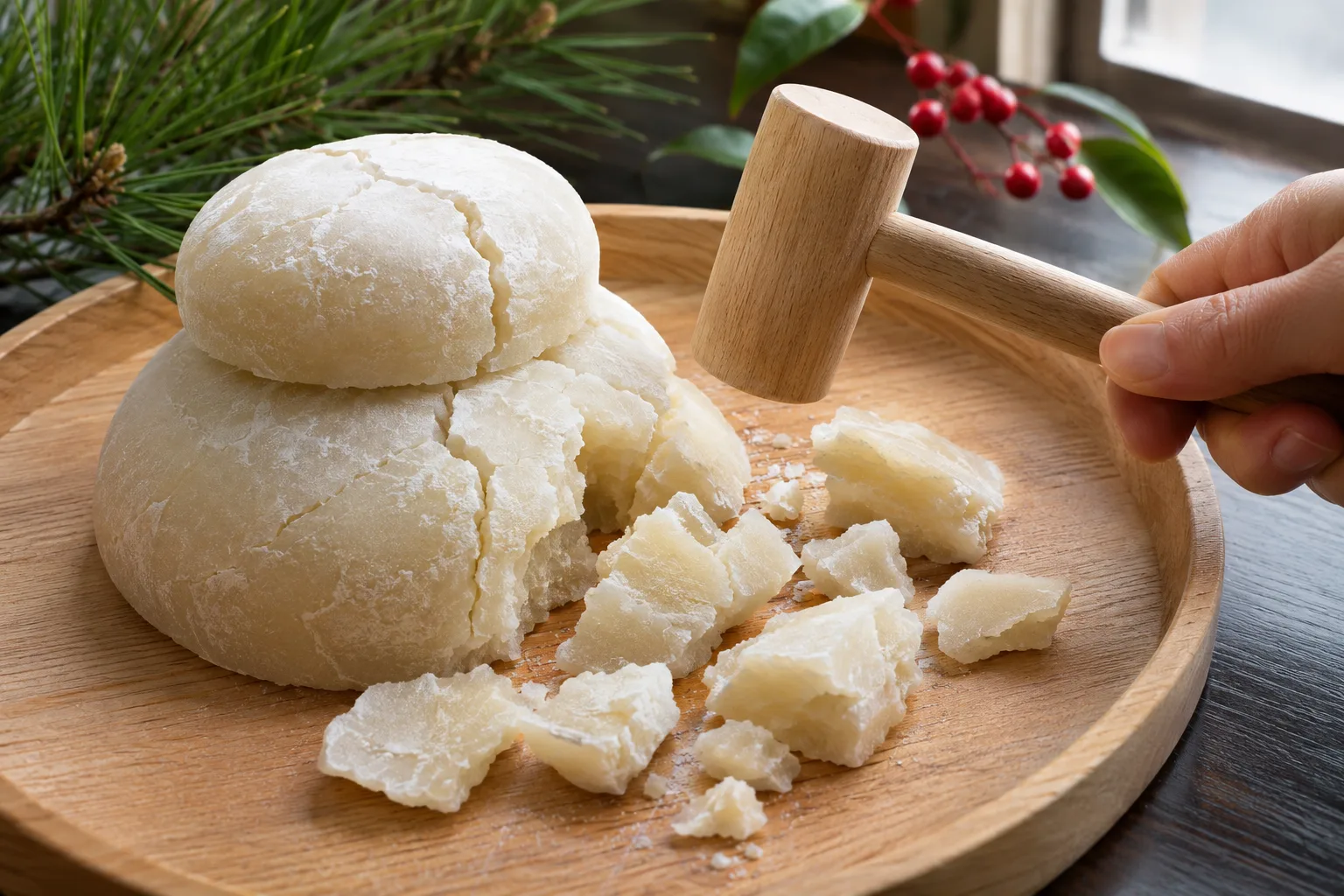
The broken mochi is eaten in ozōni or oshiruko, a sweet red bean soup. The date of Kagami Biraki varies by region.
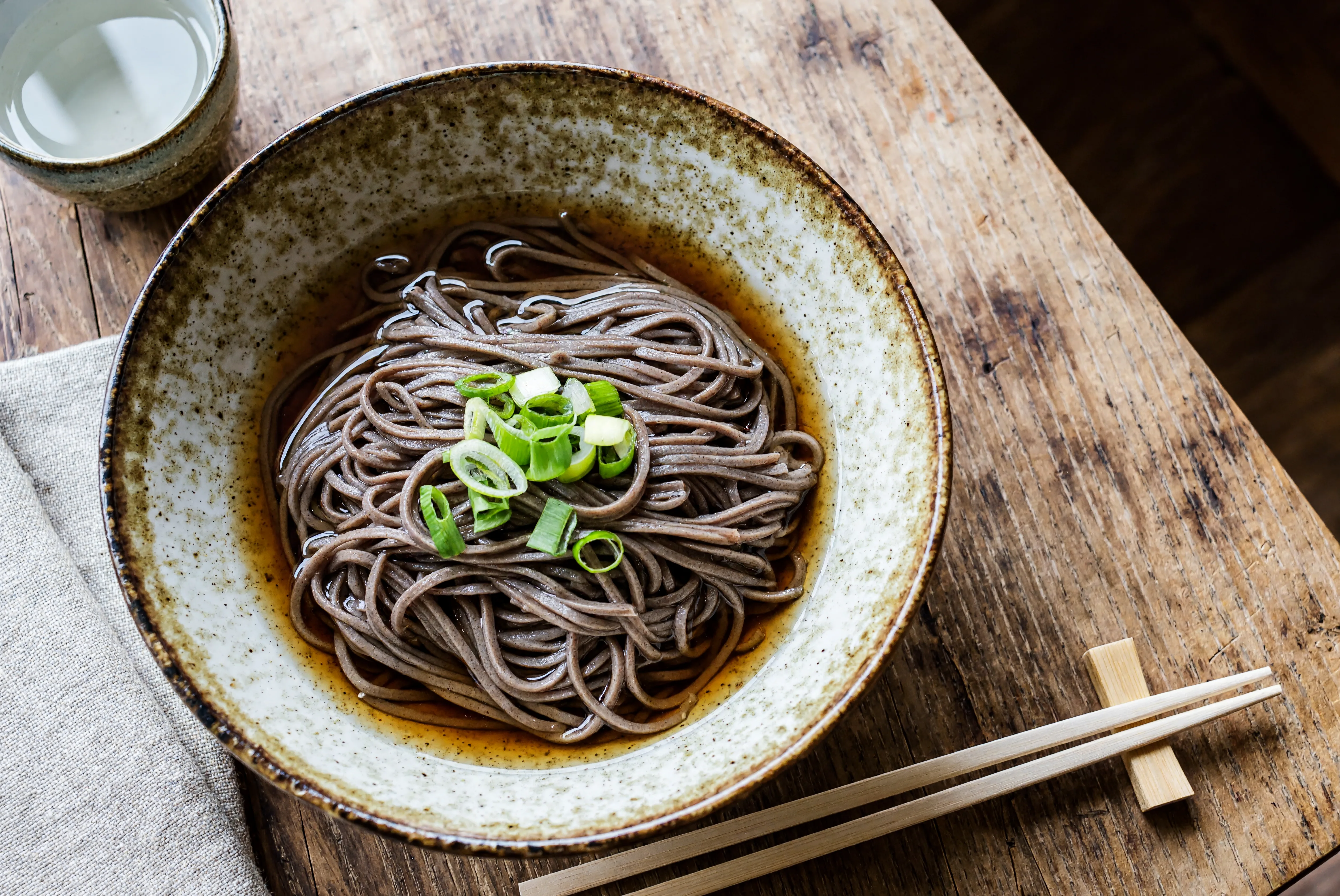
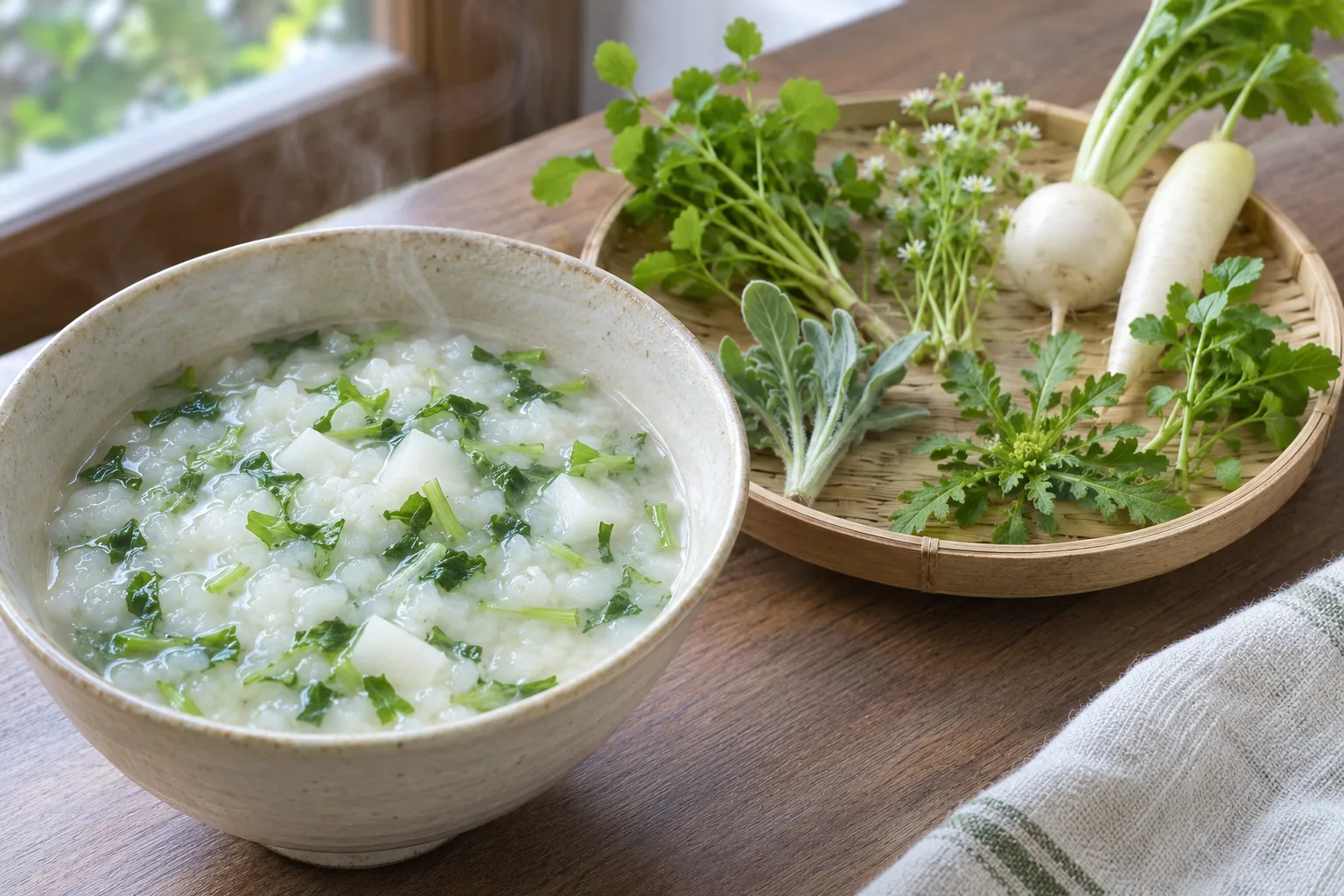
Another seasonal food is nanakusa-gayu, seven-herb rice porridge, eaten on January 7. That day is Jinjitsu no Sekku, one of the five seasonal festivals. The porridge contains seven plants: seri, nazuna, gogyō, hakobera, hotokenoza, suzuna, and suzushiro. It is also said to give the stomach and intestines a rest after the rich foods of Japanese New Year.
Is there a deadline for your first shrine or temple visit?
Hatsumōde is the custom of making your first visit to a shrine or temple after the new year begins. It isn’t limited to shrines; temples are included, too.
There is no strict deadline. Many people visit during Sanganichi, though the end of Matsu no Uchi is sometimes used as a guide.
Matsu no Uchi is often considered to end on January 7, but in some regions it lasts through January 15. There is no single nationwide cutoff for this Japanese New Year custom; local practices differ.
ClockZone tools
- Countdown timer
- World clock
- Public holidays in Japan
- Time zone converter
- 2027 public holidays in Japan
References
Imaginile din acest articol sunt generate cu IA.