Black Consciousness Day 2026: Date, Law, and Rules Across Brazil
Also available in: Deutsch·Français·日本語·Português (Brasil)
Find the date of Black Consciousness Day 2026 in Brazil, the federal law establishing the national holiday, workplace compensation rules, and history.
Black Consciousness Day 2026 will be observed on Friday, November 20. Known formally in Brazil as the National Day of Zumbi and Black Consciousness, November 20 honors the reported death date of Zumbi dos Palmares in 1695. Poet and researcher Oliveira Silveira first proposed the date during a 1971 meeting of Grupo Palmares, drawing a direct parallel with the death date of Tiradentes. Choosing November 20 served as a deliberate counterweight to May 13, the signing date of the Golden Law (Lei Áurea).
Below is a breakdown of how the date works under employment law, how it became an official nationwide holiday, and how communities mark the occasion across the country.
When is Black Consciousness Day 2026 and what does the calendar look like?
Black Consciousness Day 2026 falls on November 20, a Friday. Knowing its weekday spot helps workers, students, and travelers arrange schedules well ahead of time.
Landing on a Friday, black consciousness day 2026 gives employees who take weekends off three straight days of rest. That setup creates a long weekend in the next-to-last month of the year.
The date is officially classified as a federal statutory holiday on the Brazilian calendar. That classification ensures uniform status across every state and federal district in Brazil.
In total, 2026 includes ten national public holidays, with nine falling on weekdays. November includes two national observances: Proclamation of the Republic on November 15, and the holiday honoring black awareness day brazil 2026 on November 20. Because November 15 falls on a Sunday, it will not create an extended weekend for people who already rest on Sundays.
That leaves the November 20 break as the final long weekend of November before year-end commitments begin. Following All Souls' Day (Finados) on a Monday at the beginning of the month, brazil black consciousness day 2026 supplies a three-day weekend right before Christmas, which also lands on a Friday.
How did Law No. 14,759 turn the date into a national public holiday?
The federal government enacted Law No. 14,759 on December 21, 2023, turning black consciousness day brazil into a nationwide public holiday. This federal legislation ended decades of uneven rules where individual states and municipalities chose independently whether to take the day off.
Congress approved the bill, and President Luiz Inácio Lula da Silva signed it into law. The measure anchored the memory of Palmares directly on the official federal holiday list.
Before federal enactment, national school calendars had included the date through Law No. 10,639 in 2003, while Law No. 12,519 designated it as an official commemorative day in 2011. The legal path leading up to Black Consciousness Day 2026 reflects this step-by-step expansion across federal law.
Prior attempts to establish a countrywide holiday had stalled in Congress. In 2003, Luiz Alberto Santos introduced Bill No. 1442, which proposed a national holiday but was shelved in 2009. A separate bill introduced in 2017 cleared the Federal Senate in September 2021, reached the Chamber of Deputies in 2023, and received final approval before presidential signing that December.
In education, Law No. 10,639 of 2003 added mandatory instruction in Afro-Brazilian History and Culture to Brazil's National Education Guidelines and Bases Law for public and private schools. Required coursework covered African history, the experiences and struggles of Black people in Brazil, and Black contributions to national development. In 2008, a Ministry of Education assessment reported that school implementation faced delays due to a shortage of training for teachers, principals, and coordinators.
Before Law No. 14,759 standardized the date nationally, local and state statutes governed the observance. Alagoas enacted a state holiday for November 20 back in 1995. Rio de Janeiro approved its state holiday through State Law No. 4,007 in November 2002, and Mato Grosso followed with State Law No. 7,879 in December of that year. Amapá established its state holiday in 2007, and Amazonas passed Promulgated Law No. 84 in July 2010.
Other states took different approaches. Rio Grande do Sul added the date to its official calendar in 1987 without creating a public holiday, and São Paulo designated November as Black Consciousness Month that same year. A 2014 survey by the Secretariat of Policies for the Promotion of Racial Equality showed that 1,044 Brazilian municipalities had created local holidays for the date, including the city of São Paulo and 106 other towns across São Paulo state. In contrast, zero municipalities had declared a local holiday in the Federal District or in states like Acre, Ceará, Pará, Pernambuco, Piauí, Rio Grande do Sul, Rondônia, Roraima, and Sergipe.
What labor rules govern time off, double pay, and comp time?
Brazilian labor law allows essential public services and authorized sectors to stay open on statutory holidays. Workers scheduled on Black Consciousness Day 2026 may be entitled to double pay for the shift or compensatory time off. That statutory rule safeguards employees who work through calendar holidays.
These workplace rights depend on applicable labor statutes along with collective bargaining agreements or union accords. Ahead of Black Consciousness Day 2026, workers need to consult the specific terms negotiated by their respective unions.
Federal rules also separate statutory civic holidays from optional administrative days, known as pontos facultativos. In late 2026, for example, December 24 and December 31 will be designated as optional work hours starting at 1:00 p.m. for federal civil servants. That partial release does not guarantee time off for private-sector staff.
How did Grupo Palmares resist military dictatorship censorship?
The date originated in Porto Alegre in 1971 through poet, teacher, and researcher Oliveira Silveira, who presented the idea during a gathering to celebrate Black history through autonomous symbols.
University group members Vilmar Nunes, Ilmo da Silva, and Antônio Carlos Côrtes approved the initial plan. The members agreed that centering Zumbi provided a direct challenge to standard narratives in Brazilian history textbooks.
Under Brazil's military dictatorship, the Federal Police summoned the group to explain their plans and submit their program to government censors after local newspapers covered the event. In 1978, the Unified Black Movement (Movimento Negro Unificado) promoted the observance in its founding manifesto, expanding national momentum that paved the road to Black Consciousness Day 2026.
The organizers chose November 20 after reading an Editora Abril publication identifying that date as the death of Zumbi dos Palmares. Oliveira Silveira noted that while historical archives lacked exact records for Zumbi's birth or the founding of Palmares, documents recorded his death in combat. The group reasoned that honoring his death matched the logic behind commemorating Tiradentes on the date he was hanged.
That 1971 gathering occurred three years after the military regime enacted Institutional Act Number Five (AI-5), a period of intense political censorship. When a newspaper reported on the event under the headline "Zumbi – The Tribute of Black Theater Actors," security agencies suspected a connection between Grupo Palmares and the guerrilla group VAR-Palmares. Group members had to appear before the Federal Police, present their full performance program, and prove the cultural program was not subversive, eventually receiving a stamped permit that barred any changes without prior police authorization.
In 1973, Grupo Palmares challenged the national focus on May 13 in comments published by Jornal do Brasil, where Oliveira Silveira argued that Palmares stood as the high point of national Black history, even if schoolbooks marginalized it. Media attention encouraged similar events across multiple states each November. As Grupo Palmares concluded its activities, the Unified Black Movement adopted the cause in its 1978 manifesto, demanding that November 20 become a nationwide observance.
Who was Zumbi dos Palmares, and why is Serra da Barriga significant?
Zumbi directed the resistance at Quilombo dos Palmares until colonial troops killed him in an ambush in 1695.
Following his death, colonial authorities displayed Zumbi's severed head in Recife at Pátio do Carmo until it decomposed entirely.
Quilombo dos Palmares stood on Serra da Barriga, in what is now the municipality of União dos Palmares in Alagoas, housing between 25,000 and 30,000 people at its peak. In 1997, the federal government inscribed Zumbi's name in the Book of Heroes of the Fatherland at the Tancredo Neves Pantheon of the Fatherland and Freedom.
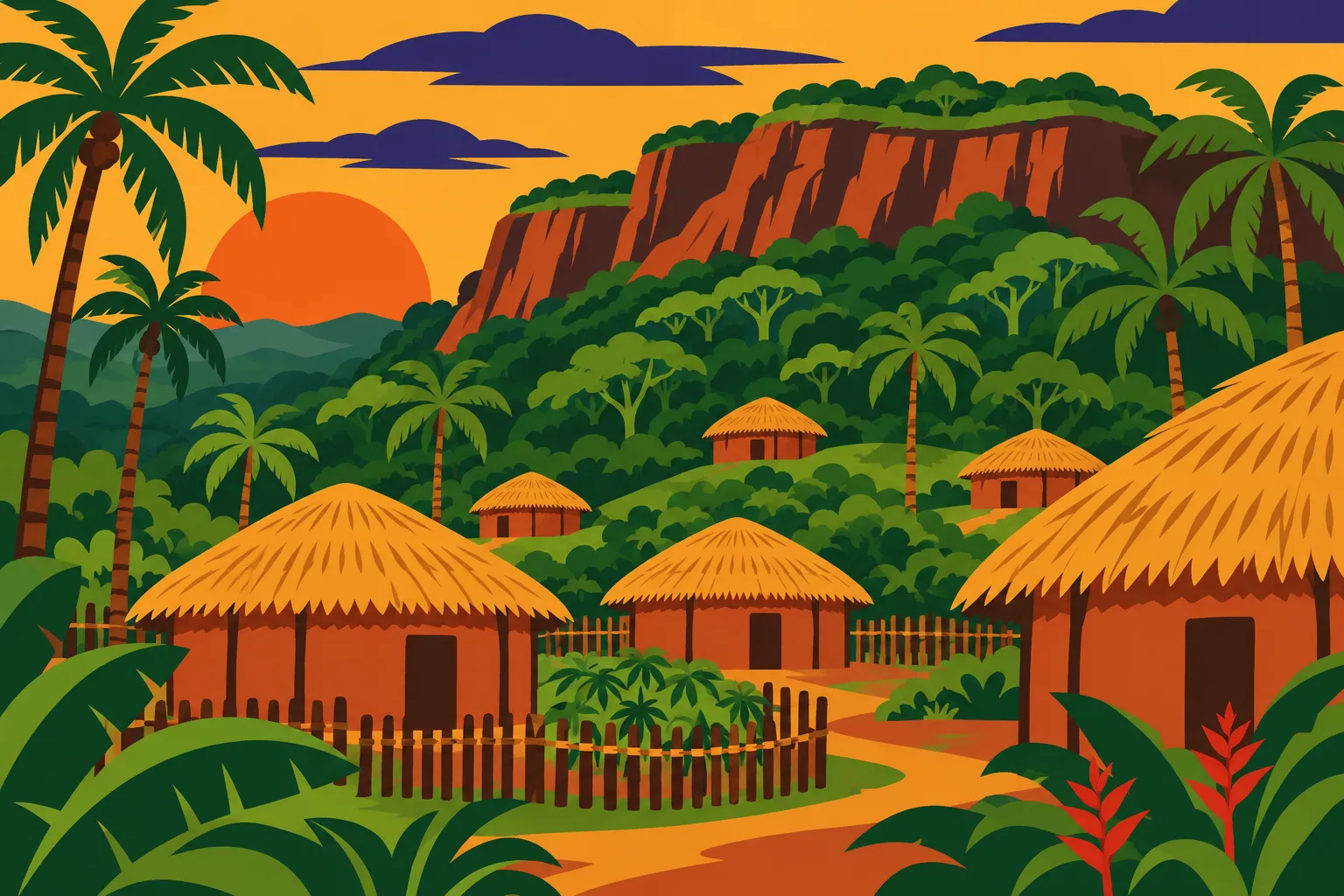
Zumbi was born in the territory of Alagoas, which formed part of the captaincy of Pernambuco during the colonial period. Quilombo dos Palmares expanded across roughly one hundred years, standing as Brazil's largest maroon community in both geographical size and duration. Its defense united multiple fortified settlements that resisted repeated military assaults.
Historian Martha Rosa Queiroz from the Palmares Cultural Foundation pointed out that recovering Zumbi's memory anchors Black historical reference points and combats racial inequality today. Honoring Zumbi's legacy provides historical footing for modern leaders organizing for civil rights across the country.
How do marches and cultural events mark Black Consciousness Day 2026?
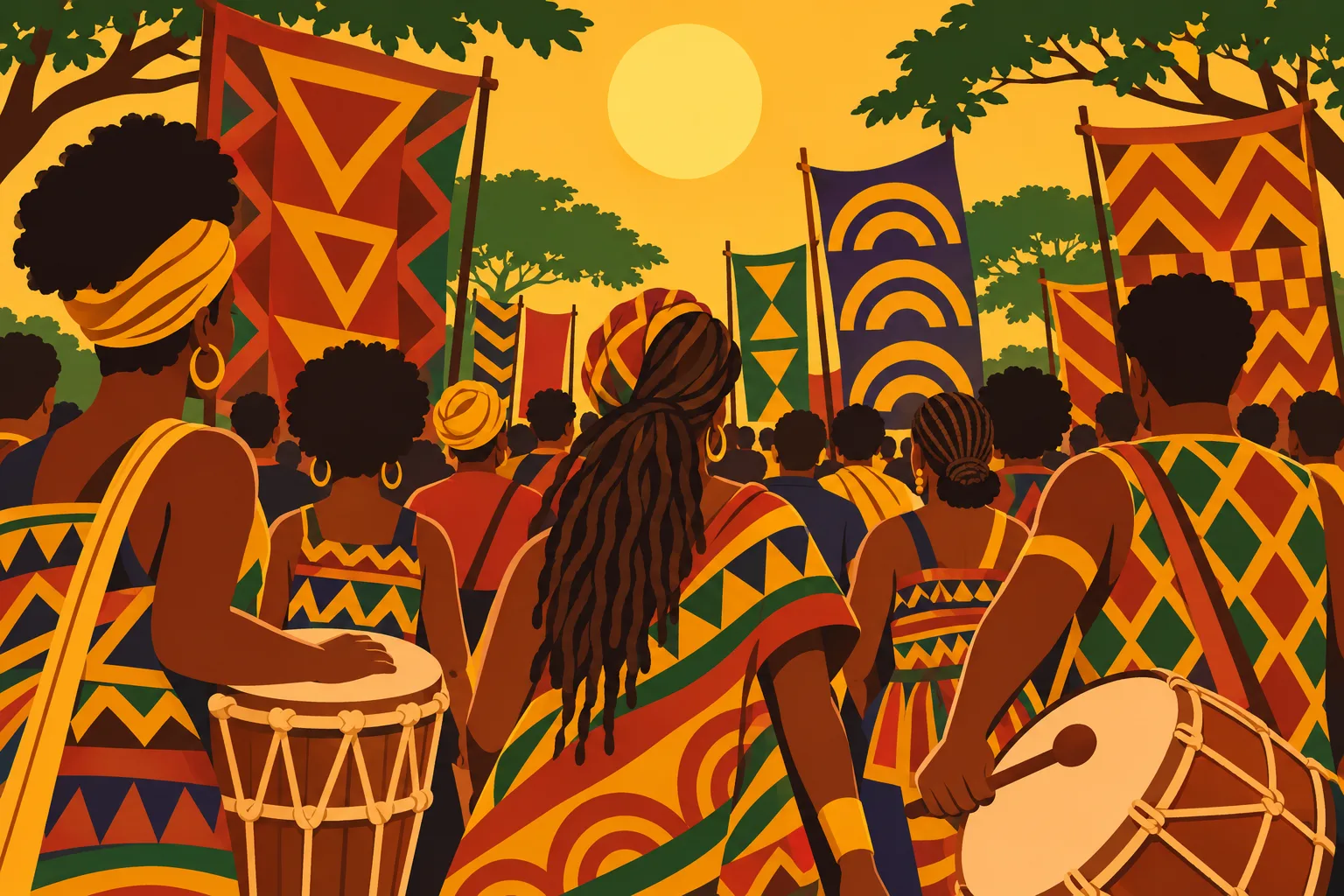
Each year, the National Coordination of Black Entities organizes the Zumbi dos Palmares March to highlight racial justice issues.
Event schedules throughout the week of black consciousness day 2026 feature seminars, workshops, public hearings, street walks, and educational courses. These public forums examine labor market participation and systemic disparities.
Tributes during the observance highlight other historical figures of Black resistance as well, including Dandara, Maria Quitéria, Carlos Marighella, and abolitionist lawyer Luiz Gama. Community events highlight their lives to broaden public knowledge of Brazilian history.
Alongside street rallies, schools and neighborhood centers host workshops examining racial identity, anti-racist education, and Afro-Brazilian arts. These gatherings create community spaces across Brazil to discuss civil rights, public policy, and equality on Black Consciousness Day 2026.
ClockZone tools
- Countdown timer
- World clock
- Public holidays in Brazil
- Time zone converter
- 2026 public holidays in Brazil
References
- Quais são os próximos feriados de 2026? Veja os três que restam | G1 · g1.globo.com
- Feriados 2026 – Calendário com 12 feriados prolongados para viajar · melhoresdestinos.com.br
- National Day of Zumbi and Black Consciousness - Wikipedia · en.wikipedia.org
- Dia Nacional de Zumbi e da Consciência Negra - Wikipedia · pt.wikipedia.org
Images in this article are AI-generated.