
World AIDS Day 2026: December 1, Themes, and What the Red Ribbon Means
World AIDS Day 2026 falls on Tuesday, December 1. Learn about the UNAIDS theme, China’s campaign, the red ribbon’s history, and planned outreach and services.
World AIDS Day 2026 falls on Tuesday, December 1. The observance takes place on December 1 every year. Counting the first observance in 1988, this is the 39th World AIDS Day, not its “39th anniversary.” It is a global observance, not a public holiday.
Two World Health Organization officials, James W. Bunn and Thomas Netter, first proposed the idea in August 1987. World AIDS Day was established in 1988, becoming the first international observance dedicated to global health. On October 27 of that year, the United Nations General Assembly formally recognized the WHO’s decision to designate December 1, 1988, as World AIDS Day.
The Joint United Nations Programme on HIV/AIDS (UNAIDS) began operating in 1996 and took over planning and promotion of the observance. The following year, UNAIDS launched the World AIDS Campaign, extending communication, prevention, and education efforts throughout the year.
Who does World AIDS Day 2026 honor, and what does it focus on?
World AIDS Day is a time to show support for people living with HIV and remember those who have died from AIDS-related illnesses.
Each year, UN agencies, governments, and civil society organizations hold activities around HIV-related themes. Their work addresses prevention and treatment alongside the everyday concerns of people living with HIV: access to care, stigma and discrimination, and quality of life. Increasing funding for the HIV response is another goal.
The UNAIDS World AIDS Day 2026 page identifies gaps that remain. In 2025, 1.2 million people worldwide acquired HIV, 570,000 died from AIDS-related causes, and nearly 9 million people living with HIV did not have access to treatment. Among children living with HIV, 55% were receiving treatment.
What are this year’s themes in China and at UNAIDS?
China’s World AIDS Day 2026 campaign theme translates as “Health First, Building and Sharing Together, Ending AIDS.” The campaign notice puts people’s health at the center of the response. It calls for cooperation across departments and public participation to make prevention and treatment services more equitable and easier to access. The goal is to end AIDS as a public health threat by 2030.
The UNAIDS theme for 2026 is “Ending AIDS starts with access.” China’s campaign notice also lists this phrase as its English-language theme.
Here, “access” covers services, rights, resources, and political leadership. What does access to services look like in daily life? Is testing available close to home? Is treatment affordable? Will your privacy be protected? Will you face discrimination when seeking care? Having a service available does not mean everyone can use it.
Funding is another focus of the UNAIDS World AIDS Day 2026 campaign. In 2025, external funding for the global HIV response fell by 18%, the largest decline in nearly two decades. Community-led organizations were among the first to feel the effects of funding losses. The 2026 Political Declaration calls for $21.9 billion annually for the AIDS response by 2030.
What does the red ribbon mean?
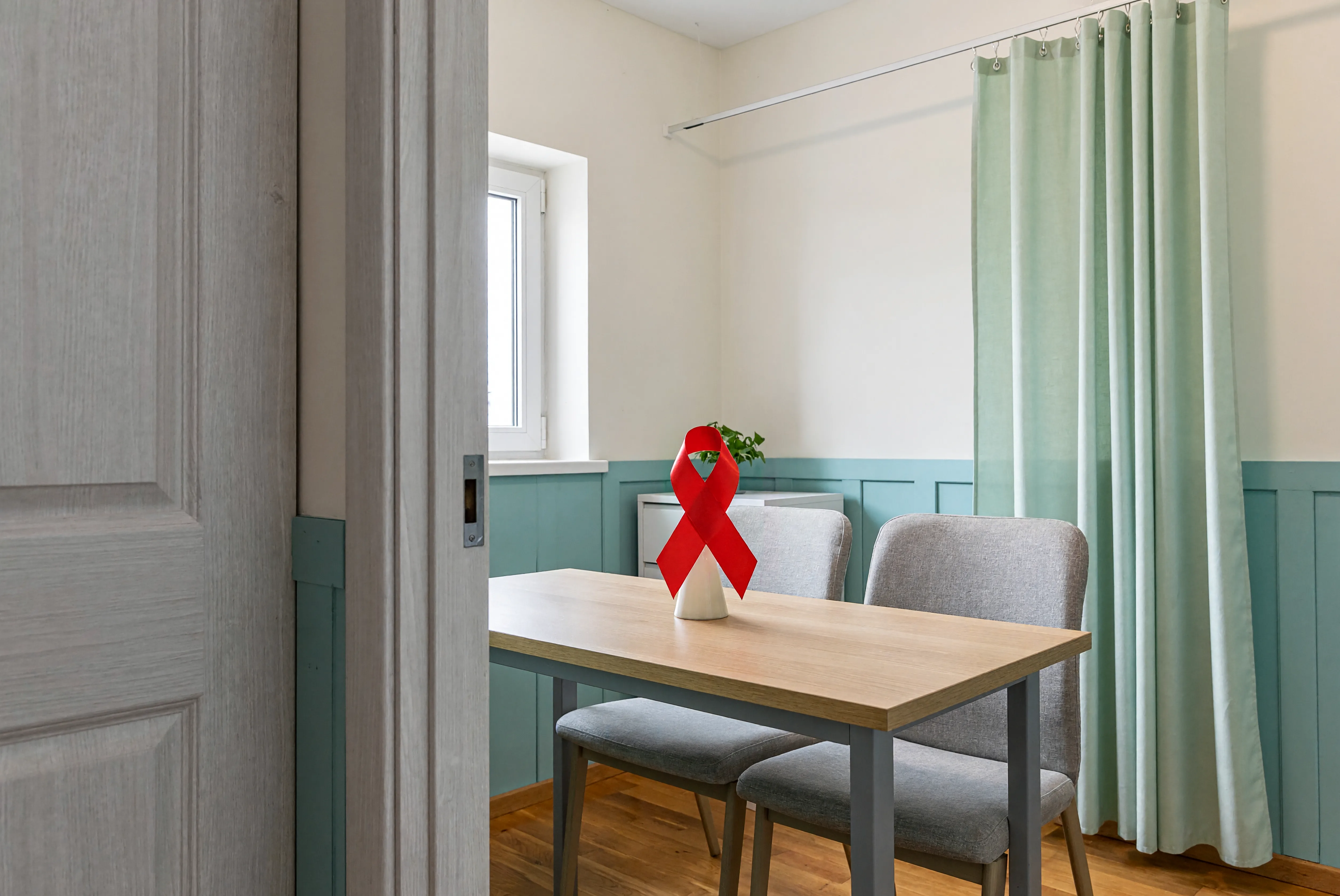
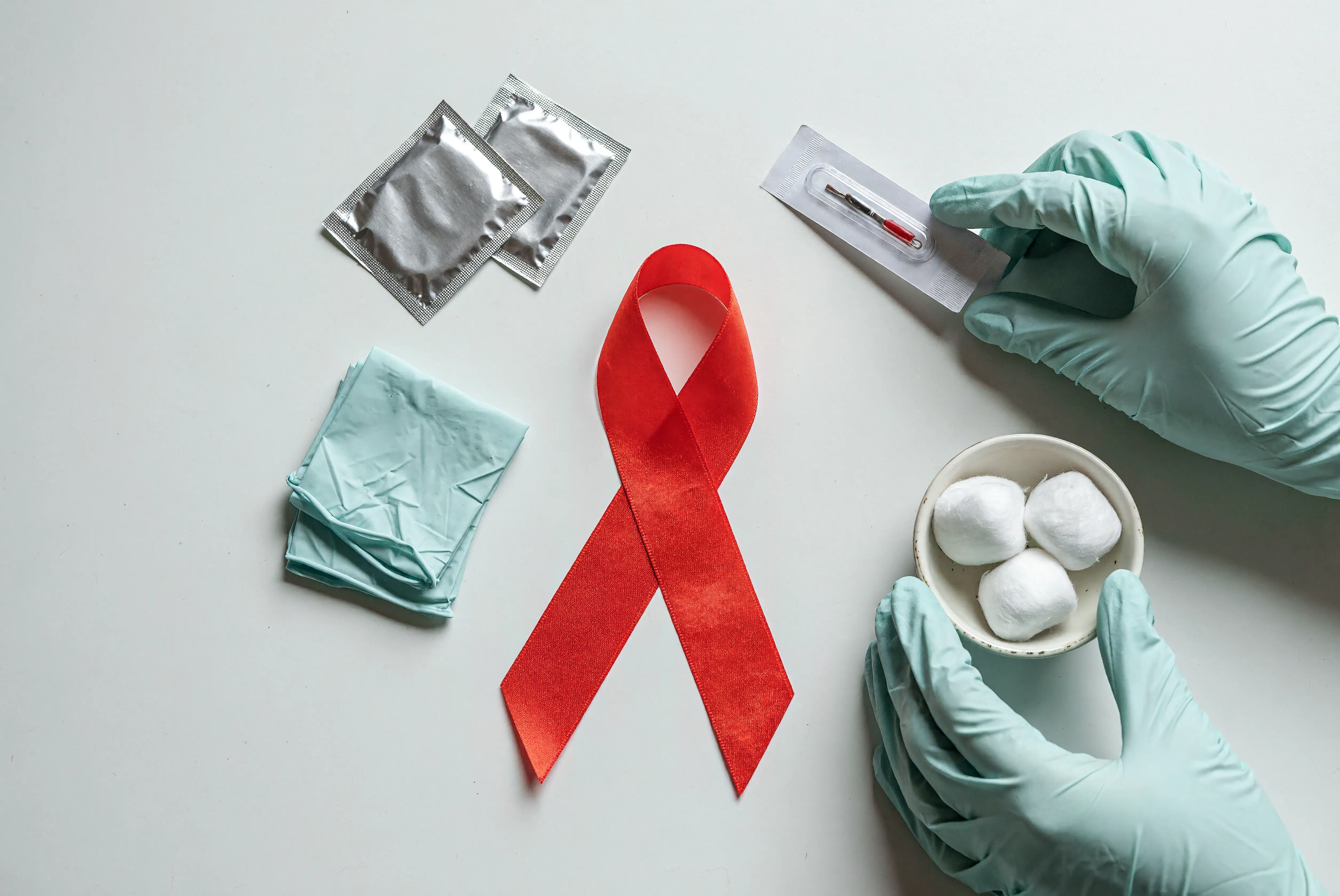
The red ribbon represents care, support, and solidarity with people living with HIV. Wearing one is a way to express that support.
The Visual AIDS Artists Caucus introduced the symbol in 1991. Its creators wanted to remain anonymous and keep the design free of copyright restrictions. The ribbon began as a wearable badge and later appeared in many other forms. It also appears in the UNAIDS logo, overlaid on the United Nations emblem to the left of the word “UNAIDS.”
Remembrance takes other forms, too. In the United States, the AIDS Memorial Quilt project invites friends and family members of people who died from AIDS to create quilt panels. The panels are then displayed across the country.
For World AIDS Day 2026, UNAIDS encourages people to wear a red ribbon, learn where access to services falls short in their communities, and share campaign materials using “#WorldAIDSDay.” Alongside the visible symbol, the campaign asks if people can get the services they need where they live.
What outreach is planned in schools, communities, and transit hubs?
China’s World AIDS Day 2026 campaign notice sets out the following areas for local outreach. Specific activities depend on local announcements.
On campuses, colleges, universities, and vocational schools will share HIV prevention and control information with students and staff through themed class meetings, expert talks, knowledge competitions, and interactive activities.
In communities, public health committees under village and residents’ committees, along with village and neighborhood grid-based community networks, will incorporate education into healthy village initiatives and basic public health services. The notice also calls for HIV prevention information to reach businesses, hospitals, and households, with participation from businesses, public institutions, social organizations, and volunteers.
Passenger terminals and stations will host the 2026 “Protecting Health on the Journey” HIV prevention awareness month, aimed at transportation workers and travelers. Outreach will use electronic displays, television, radio, bulletin boards, posters, and free informational materials.
Educational topics include safer sex, seeking HIV testing, and post-exposure prophylaxis, with content adapted to different regions and population groups. Trade unions, Communist Youth League organizations, women’s federations, and other mass organizations will also share HIV prevention information with workers, young people, and women.
China’s National Disease Control and Prevention Administration will organize the production of campaign posters. It will also guide the Chinese Center for Disease Control and Prevention, the Chinese Center for Health Education, and other institutions in producing materials for local authorities and relevant departments to download and use. The notice also schedules a themed sexually transmitted infection prevention awareness week to support education about multiple diseases together.
If you receive a World AIDS Day 2026 activity notice from a school, workplace, or community organization in China, the participation rules set a firm boundary: people must not be forced to participate or assigned mandatory activity tasks. The requirements also call for combining ongoing education with concentrated campaigns and focusing on practical results.
What services are included beyond public education?
The plans cover testing and counseling, antiretroviral treatment, and prevention interventions. The notice calls for easier access to these services, clearer pathways to medication for pre-exposure and post-exposure prophylaxis, and information that tells people where and how to get care.
During regular follow-up visits with people living with HIV, health care institutions should also explain HIV prevention information and policies. This includes the free treatment policy and related rights and responsibilities.
For psychological support, the notice calls for using channels such as the “12356” psychological assistance hotline and the “12355” youth service hotline to provide counseling and care for people living with HIV.
ClockZone tools
References
- World AIDS Day 2026: Ending AIDS starts with access. | UNAIDS · unaids.org
- World AIDS Day | UNAIDS · unaids.org
- World AIDS Day 2026 · timeanddate.com
- 国务院防治艾滋病工作委员会办公室印发关于做好2026年“世界艾滋病日”主题活动的通知_澎湃号·政务_澎湃新闻-The Paper · thepaper.cn
- World AIDS Day - Wikipedia · en.wikipedia.org
- 世界艾滋病日 - Wikipedia · zh.wikipedia.org
Images in this article are AI-generated.