Shichi-Go-San Ages 3 5 7: When Is It in 2026?
Shichi-Go-San ages 3 5 7: the official date is Sunday, November 15, 2026. Learn how counting age, shrine visits, and traditions work.
The official date for Shichi-Go-San ages 3 5 7 in 2026 is Sunday, November 15. November 15 is recognized as the official date every year.
Families do not have to visit a shrine or temple on November 15 itself. Since the date falls on a Sunday in 2026, some families may go on a nearby day off instead. Choose a day for the prayer or visit that fits your family’s schedule and your child’s needs. The official date and the day you visit do not have to be the same.
Why is Shichi-Go-San officially held on November 15?
Shichi-Go-San celebrates children’s growth at ages 3, 5, and 7 while families pray for their health and happiness. November 15 is associated with Kishu-nichi, a day on the old lunar calendar. It was traditionally seen as a fortunate day for holding ceremonies because demons were believed not to interfere.
Shichi-Go-San is not an event that requires families to match the day with a specific rokuyō, or traditional calendar designation.
One explanation for November 15 as Shichi-Go-San Day connects it with November 15, 1681, when Tokugawa Tsunayoshi took his eldest son, Tokumatsu, to a shrine and prayed for his health. Other views trace the celebration to childhood growth rituals among aristocrats during the Heian period or customs from the Muromachi period. The origins have several explanations, so the present-day celebration cannot be attributed to one event alone.
Shichi-Go-San ages 3 5 7: how do counting age and actual age differ?
The timing of Shichi-Go-San can change depending on the age-counting system a family uses.
Kazoedoshi, or traditional counting age, starts a child at age 1 at birth and adds a year at each New Year. Full age starts a child at age 0 and adds a year on each birthday. Full age is the system most familiar to people today.
Historically, families often celebrated by counting age, but many now choose full age. The difference can be especially noticeable at age 3, when children may be at different stages of development under the two systems.
Neither system is required. Some families use different systems for siblings, while others visit together in the same year.
Who celebrates Shichi-Go-San at ages 3, 5, and 7?
The commonly known pattern is for girls to celebrate at ages 3 and 7, and boys at age 5. Some families celebrate boys at age 3 as well, though regional customs differ. Celebrating boys at age 3 has become more common in recent years.
Some families celebrate girls at age 5 or boys at age 7. Age and gender customs are not exactly the same throughout Japan. If your family wants to follow local traditions, checking with relatives or someone familiar with the area can make the choice easier.
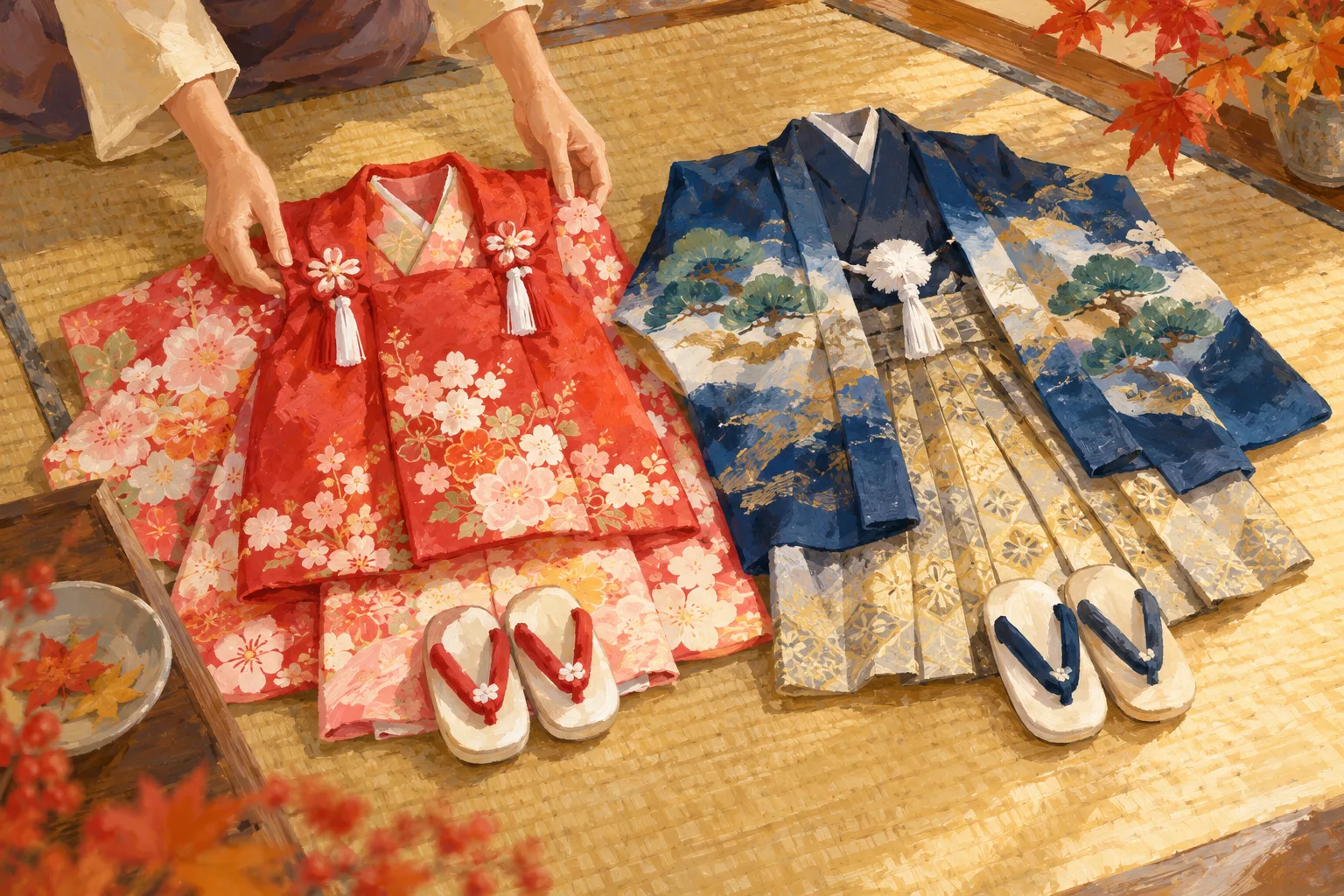
Traditional explanations for each age include Kamioki at age 3, when children began growing out their hair; Hakamagi at age 5, when boys wore hakama; and Himo-toki at age 7, when girls changed from tied-string kimono to kimono worn with an obi.
What happens at a shrine or temple?
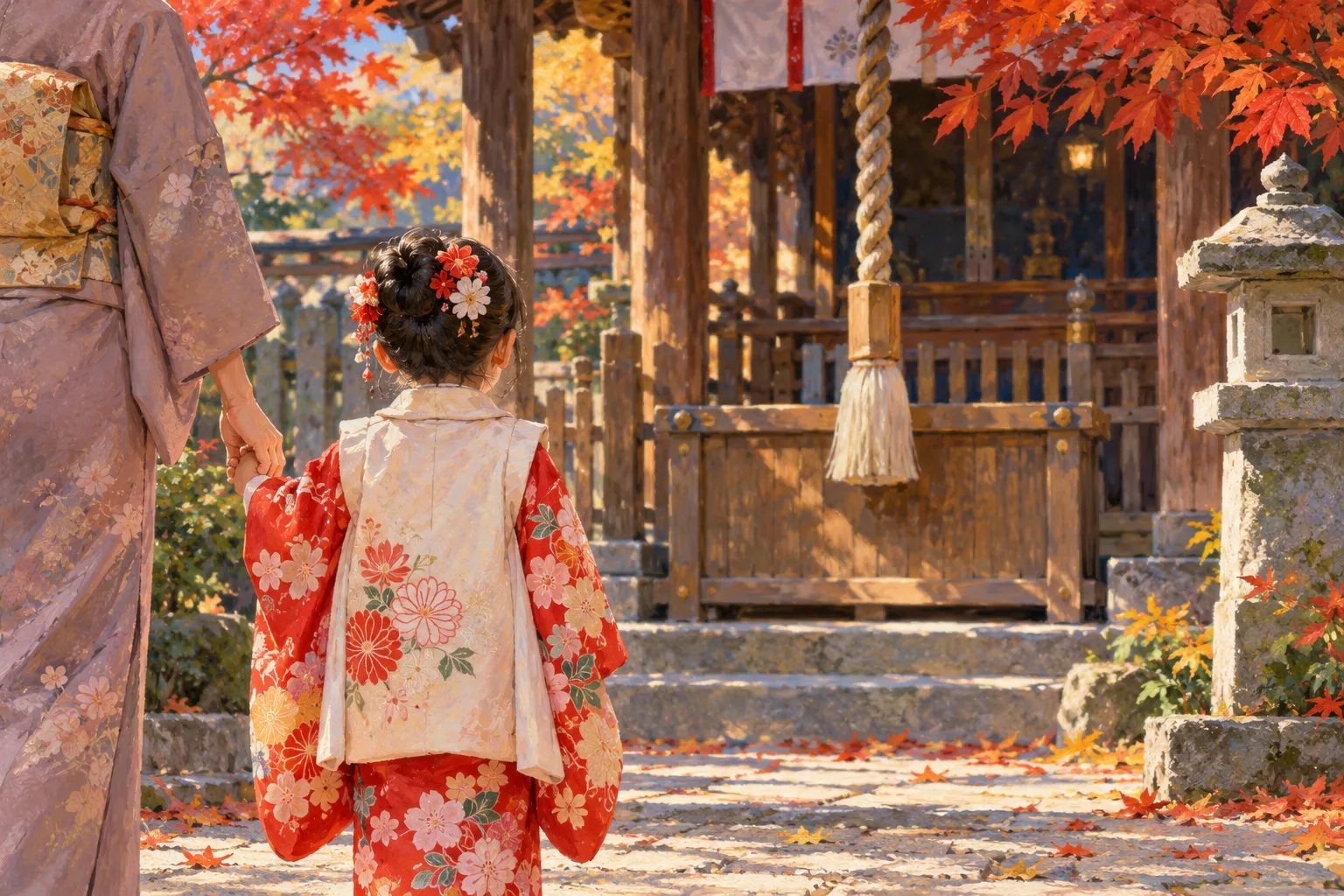
For Shichi-Go-San, some families visit a shrine to pray for a child’s health and continued growth. They may also request a prayer ceremony and receive a blessing from a Shinto priest. Visit customs vary by family and region. Some families choose a temple, so a shrine is not required.
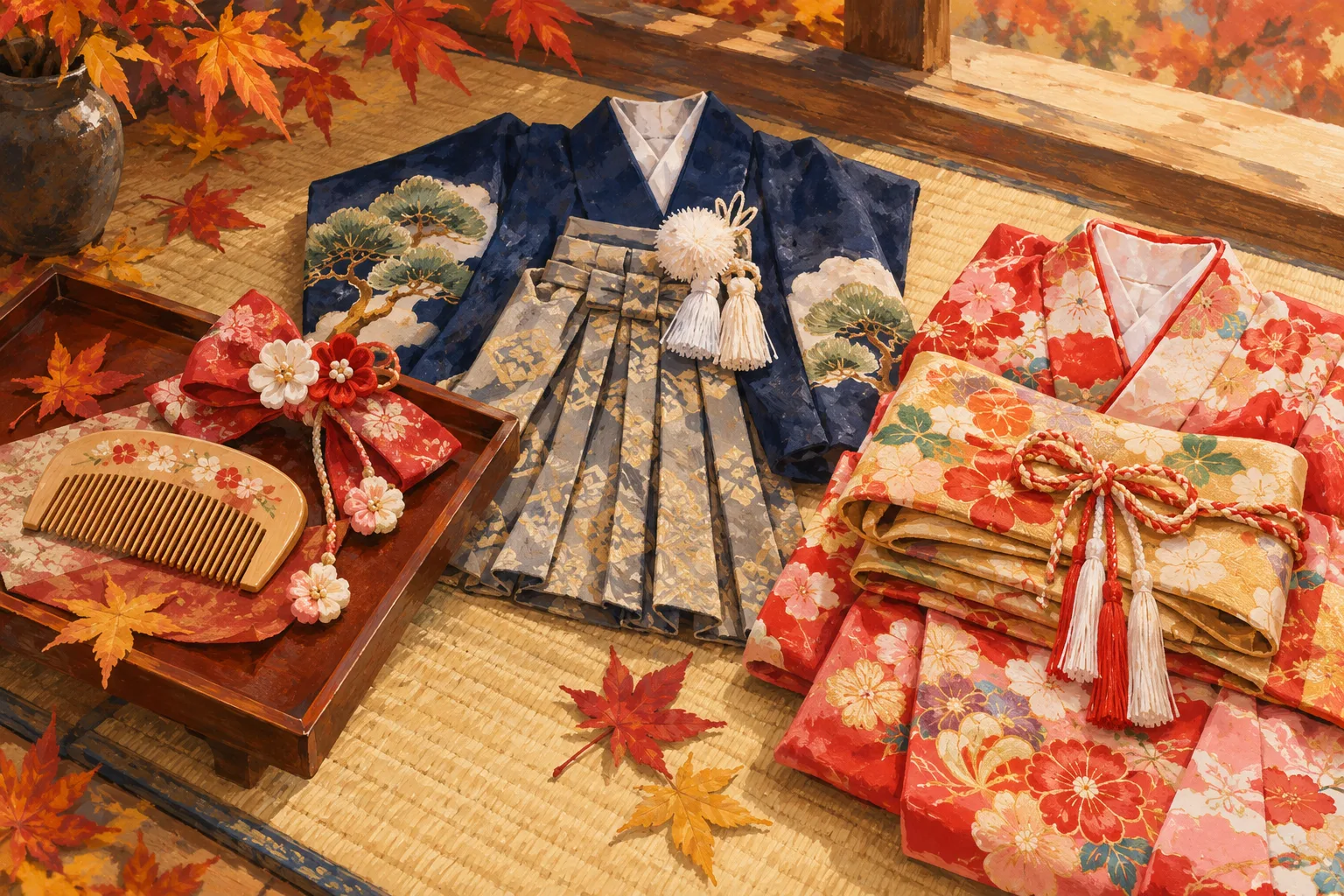
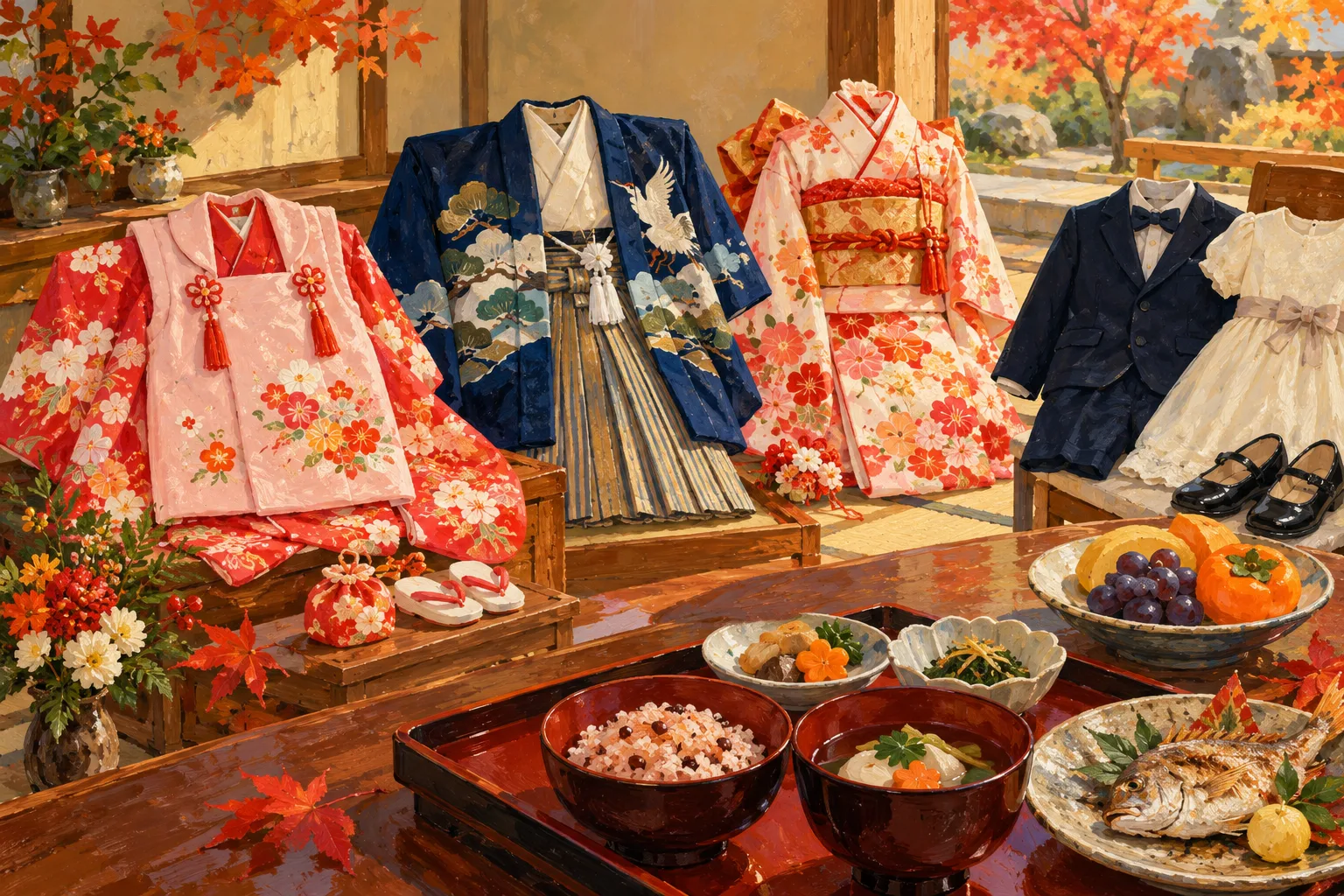
Traditional outfits include a kimono with a hifu vest for a 3-year-old, hakama and a haori for a 5-year-old boy, and a girl’s kimono worn with an obi at age 7. Some families attend in Western clothing. There is no single required combination of clothing, a prayer ceremony, photos, and a family meal. Families can make choices based on the child’s age and local customs.
Families can keep November 15 in mind as the official date while choosing a prayer day when everyone can gather without strain.
ClockZone tools
- Countdown timer
- World clock
- Public holidays in Japan
- Time zone converter
- 2026 public holidays in Japan
References
Images in this article are AI-generated.